






Key Takeaways
- Data-driven hiring utilizes recruitment metrics to improve decision-making and efficiency, fundamentally changing how HR teams identify and attract talent.
- Key performance indicators (KPIs) such as time-to-hire and quality-of-hire are essential for evaluating recruitment success and informing ongoing talent strategies.
- Artificial Intelligence (AI) and predictive analytics are transforming talent acquisition by automating processes, enhancing accuracy, and reducing bias for more equitable workplaces.
- Implementing data-driven strategies can lead to faster hiring times, more successful placements, and significantly improved candidate experiences from start to finish.
Understanding Recruitment Metrics
With tightening competition in the job market, organizations are leveraging recruitment metrics to gain a crucial edge in today’s dynamic environment. Data-driven hiring leverages these quantifiable measures to inform each stage of the hiring funnel, from the earliest candidate sourcing efforts to the final steps of onboarding. By focusing on recruitment KPIs examples, talent acquisition leaders can dissect every facet of their strategies, making highly informed decisions that impact the quality, efficiency, and sustainability of their overall hiring approach.
Recruitment metrics provide a systematic way to evaluate the effectiveness of hiring efforts, offering actionable insights derived from real data. Rather than relying solely on past habits or gut instincts, companies can utilize these empirical measures to pinpoint inefficiencies, track what works, and identify areas that need improvement. This quantifiable feedback loop enables hiring teams to operate with greater transparency and accountability, allowing them to adapt quickly to changing business needs or labor market conditions.
Some of the most valuable recruitment KPIs include:
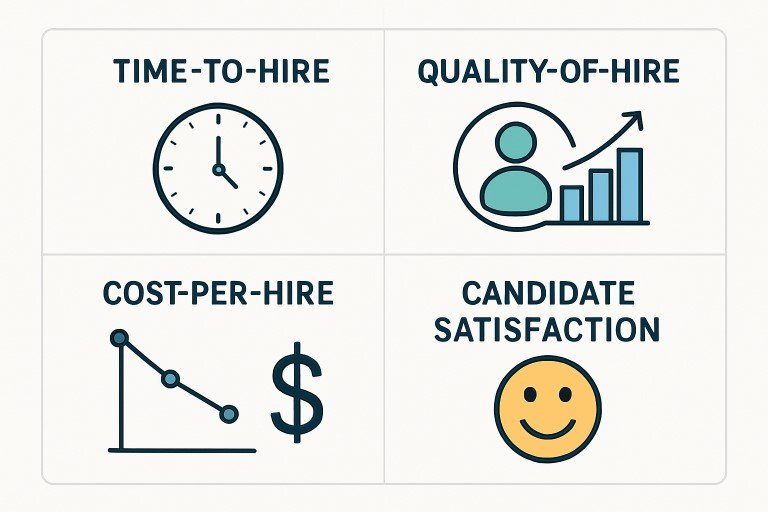
- Time-to-Hire: Measures the number of days between job requisition and accepted offer, spotlighting bottlenecks or strengths in the hiring process. Shortening time-to-hire can be a competitive advantage, ensuring top candidates aren’t lost to faster-moving organizations.
- Quality of Hire: Assesses new employees’ performance and retention, offering a direct connection between recruitment efforts and business outcomes. This metric validates whether the right talent is being sourced and whether hiring criteria align with on-the-job success.
- Cost-per-Hire: Calculates the total expenditure involved in filling a vacancy, from advertising costs and agency fees to recruiter time and technology expenses. Understanding and managing this figure can help optimize recruitment budgets for sustainable growth.
- Candidate Satisfaction: Evaluates how job seekers perceive each step of their journey, from the initial application to onboarding. Positive experiences bolster employer branding, improve referrals, and can even reduce reneged job offers or early attrition.
The constant monitoring and analysis of these metrics enable organizations to refine their processes continually. This not only justifies recruitment spends with tangible results, but also fosters a candidate-first mindset that forges stronger relationships in the competitive talent search.
The Role of AI in Talent Acquisition
Artificial Intelligence is rapidly transforming the recruitment landscape, introducing innovations that streamline operations and enhance the precision of hiring decisions. By integrating AI-driven tools into day-to-day workflows, organizations can automate repetitive, time-consuming tasks—such as parsing thousands of resumes or searching digital profiles—allowing recruiters to devote more time to complex, people-focused interactions.
AI solutions rely on vast datasets to screen applicants for relevant skills, work experiences, and even cultural fit, significantly reducing time-to-hire and improving the odds of securing ideal candidates quickly. Powerful algorithms can sift through applicant pools to identify key traits and potential red flags. At the same time, chatbots provide instant support for candidate FAQs and automate interview scheduling, making the process seamless for both recruiters and job seekers. Additionally, these tools help mitigate unconscious bias by ensuring that each candidate is evaluated using consistent and transparent criteria.
According to Forbes, organizations adopting AI-powered recruiting methods have witnessed significantly expedited hiring cycles, notable increases in candidate satisfaction scores, and more inclusive hiring results—contributing to stronger, more diverse teams over time.
Implementing Data-Driven Strategies
Translating data insights into practical applications requires a structured, disciplined approach and ongoing collaboration between HR and business leaders. Organizations seeking to embed data-driven hiring must be meticulous in their implementation, ensuring technology, people, and processes are aligned for maximum impact. To be successful, companies should consider the following critical steps:
- Define Clear Objectives: Set unambiguous, measurable goals centered on key recruitment KPIs, ensuring they align with broader business objectives, such as workforce diversity, growth ambitions, or internal mobility.
- Utilize Advanced Analytics: Deploy software platforms with real-time dashboards, predictive analytics, and deep reporting capabilities—allowing HR teams to monitor hiring pipelines, forecast trends, and respond proactively.
- Train HR Teams: Invest in building data and analytics skills among recruiters and hiring managers, empowering them to interpret metric outputs, adapt sourcing strategies, and articulate findings to business stakeholders.
- Regularly Review Metrics: Institute regular review sessions for recruitment data to detect emerging patterns, uncover process gaps, and iterate on talent acquisition strategies for continuous improvement.
When organizations execute these steps thoughtfully, data-driven hiring evolves into a core engine of adaptability and efficiency, ensuring talent acquisition keeps pace with strategic business needs.
Challenges and Considerations
Despite its many benefits, the shift to data-driven hiring presents several challenges that must be proactively managed. Many organizations encounter issues related to technology integration, data quality, or the security and privacy of sensitive information. Bringing together disparate HR, applicant tracking, and analytics systems often requires both financial investment and a considered change management approach to ensure adoption and usability across teams.
In addition to technical challenges, organizations must continually focus on regulatory compliance, particularly in the context of emerging data privacy laws and candidate expectations regarding the use of personal information. Transparent communication—both internally and with external candidates—helps foster trust and mitigate risk.
It’s also essential to remember that recruitment is fundamentally a people-driven endeavor. While data and technology can highlight trends or surface high-potential candidates, human recruiters offer critical judgment, cultural insight, and the ability to assess both hard and soft skills, as well as organizational fit. The best hiring outcomes result from blending analytic rigor with personal empathy and discernment.
Recent coverage from Forbes highlights that organizations achieving the most significant recruitment success are those that thoughtfully combine the power of data with the nuanced understanding of experienced recruiters, rather than relying solely on one approach.
Conclusion
As the field of talent acquisition continues to evolve, data-driven hiring is emerging as a vital tool for organizations determined to build high-performing, resilient teams. By fully harnessing recruitment metrics and AI, HR professionals can drive better outcomes—enabling brighter, fairer, and more efficient hiring decisions in an increasingly competitive marketplace. Ultimately, companies that embed data-informed decision-making deeply within their recruitment strategies will not only attract and retain the best candidates but also position themselves for sustainable success in the fast-paced world of modern work.