




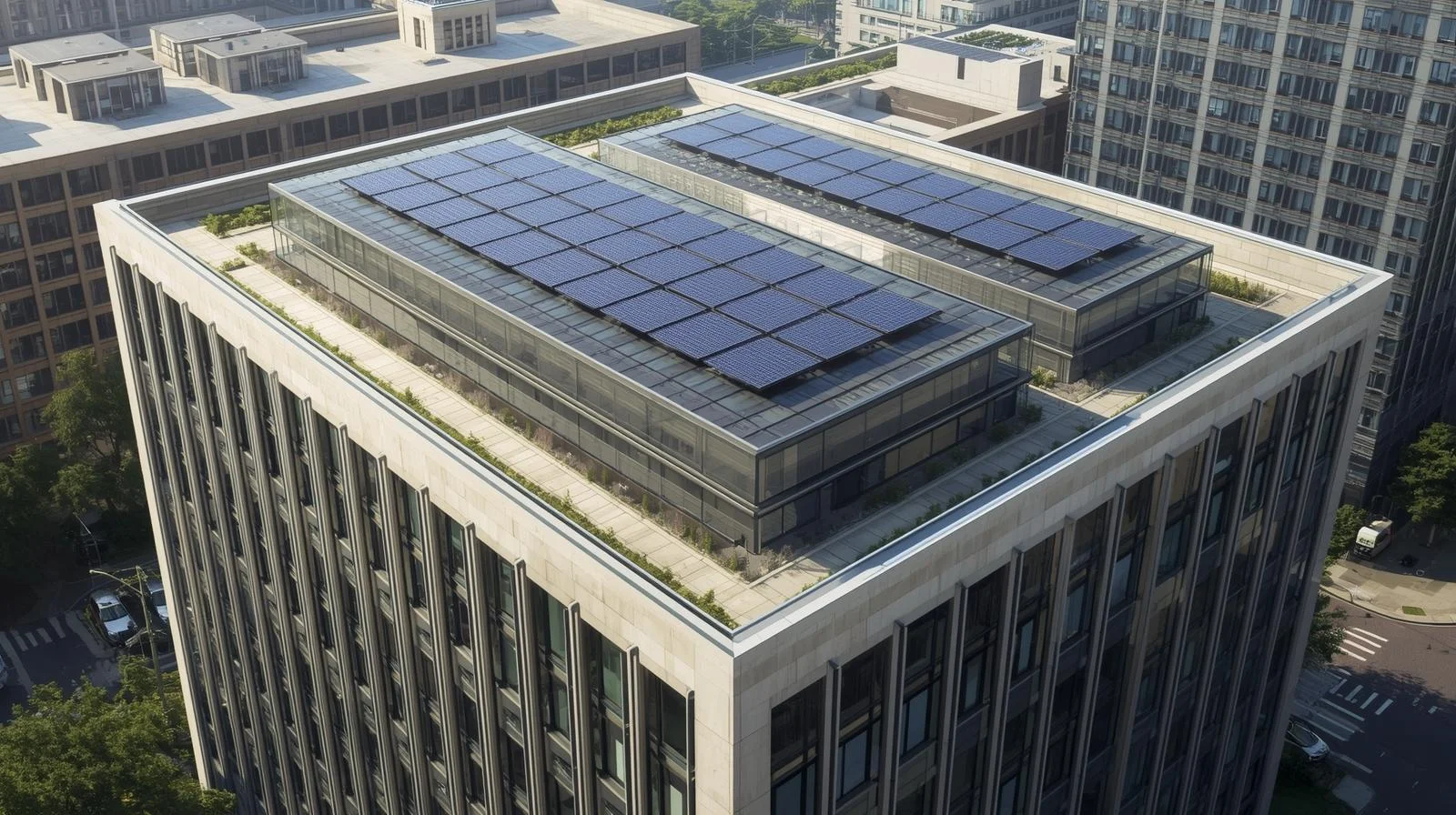
Imagine your building generating electricity from its skin—roof tiles, façades, or glass that pull power from sunlight while serving as structure. Building integrated solar panels (BIPV) replace or become part of building materials, letting you capture renewable energy without bulky racks or separate arrays.
You’ll learn how BIPV works, what design and installation choices matter, and where it brings the most value—whether you prioritize aesthetics, energy savings, or space efficiency. This article guides you through practical trade-offs, common applications, and what to check before committing to integration so you can decide if BIPV fits your project.
Understanding Building Integrated Solar Panels
Building-integrated solar panels replace or combine with conventional building materials to produce electricity, provide weather protection, and influence the building’s appearance and thermal performance. You’ll learn what these systems are, the main technology variants, and the practical advantages they offer compared with mounted rooftop arrays.
Definition and Core Concepts
Building-integrated photovoltaics (BIPV) embed photovoltaic functionality into parts of the building envelope—roofing, facades, windows, canopies—so the solar material becomes a component of the structure rather than an add-on. You should view BIPV as a multifunctional element: it serves as cladding or glazing while generating DC electricity that feeds inverters and your building’s electrical system.
Key technical points to note:
- Electrical integration: modules connect to inverters, metering, and building energy management.
- Structural integration: modules must meet load, fire, and weatherproofing standards.
- Aesthetic integration: materials come in colors, transparencies, and form factors to match design intent.
Types of Building Integrated Solar Technologies
You’ll encounter several BIPV types suited to different building elements and design goals:
- BIPV Roofing: Solar tiles or shingles replace conventional roof coverings. They match roof geometry and provide weatherproofing plus generation.
- Solar Facades and Curtain Walls: Flat or shaped PV panels mount as part of the exterior cladding. Options include opaque modules and ventilated rainscreens.
- Building-Integrated Glazing (BIPV Windows/Skylights): Semi-transparent or thin-film modules act as glazing, letting light through while producing power.
- Solar Canopies and Balconies: Structural elements like sunshades, awnings, or balcony rails incorporate PV to provide shade and generation.
Material variants include crystalline silicon, thin-film (CIGS, CdTe), and emerging semi-transparent and bifacial cells. Choose based on efficiency, weight, appearance, and how the product meets local building codes.
Advantages Over Traditional Solar Panels
BIPV delivers several tangible benefits compared with rack-mounted rooftop arrays that you should weigh during design:
- Material substitution value: BIPV replaces conventional cladding or glazing, reducing combined material and installation costs.
- Architectural integration: You gain a cleaner visual outcome and have more flexibility to meet design guidelines or heritage restrictions.
- Thermal and shading benefits: Facades and canopies can reduce solar heat gain, lowering cooling loads when oriented properly.
- Space efficiency: Urban sites with limited roof area can exploit facades, windows, and canopies to increase generation capacity.
- Regulatory and incentive alignment: Some jurisdictions offer incentives or credits specifically for integrated renewables or net-zero-ready buildings.
Limitations you must consider include higher upfront product costs compared with commodity modules, potentially lower peak efficiency for aesthetic or semi-transparent options, and greater coordination with architects, structural engineers, and code authorities during design and permitting.
Design, Installation, and Applications
BIPV systems must balance energy generation, weatherproofing, structural load, and aesthetic goals. You will need to coordinate material choices, mounting details, electrical routing, and maintenance access early in design to avoid costly changes later.
Architectural Integration Considerations
You should match module form, color, and scale to the building’s envelope while meeting thermal and water-resistive performance. Choose between semi-transparent glass modules for façades, thin-film or framed modules for roofs, and custom-shaped cladding for feature walls. Review U-values, solar heat gain, and shading impacts to ensure the BIPV contributes positively to glazing performance or roof insulation.
Coordinate structural loads with an engineer: attachment points, wind uplift, and snow loads differ from conventional cladding. Plan flashing, expansion joints, and drainage paths so modules become part of the weather barrier. Specify fire resistance, impact resistance, and local code compliance early.
Detail electrical routing, inverter placement, and access for cleaning and repairs. Provide space for combiner boxes and ensure photovoltaic array orientation and tilt optimize production given site constraints. Use mockups to validate appearance and performance before full installation.
Common Applications in Modern Buildings
You can integrate BIPV on pitched roofs as replacement tiles, on flat roofs as low-profile modules, and on façades as opaque or semi-transparent panels. Use colored or patterned modules on public buildings to meet aesthetic aims while generating on-site electricity. Incorporate BIPV into canopies and sunshades to provide shading and power simultaneously.
Residential applications often favor roof-integrated systems that replace tiles or metal roofing for a concealed look. Commercial and institutional projects use curtain wall integrations, parking canopies, and atrium glazing with semi-transparent PV to offset large energy loads. BIPV also suits retrofits where façade replacement is already planned, enabling cost-effective integration.
Installation and Maintenance Practices
Follow manufacturer installation guides and local electrical codes; coordinate early with roofing and façade trades to avoid conflicts. Use certified installers experienced with BIPV attachment systems to ensure weather-tight transitions and correct structural anchorage. Verify compatibility of module frames, flashings, and sealants during procurement.
Set up a maintenance plan that includes scheduled visual inspections, periodic cleaning (especially on vertical façades), I-V performance testing, and monitoring of inverters and junction boxes. Keep a record of module serial numbers, warranties, and a site diagram showing DC routing for safe servicing. Plan for accessible replacement of damaged modules without disturbing large sections of the envelope.