




A 4K projector can change your life in the area of home entertainment. You may like watching movies, streaming shows, playing games, or making presentations, but there is no better way to do it than with a 4K projector that provides the best clarity, sharpness, and immersion. Nevertheless, there are so many models that one can easily get confused. Knowing the main aspects to be considered prior to purchasing a 4k projector would help you to buy the device that would be suitable in terms of its fit to your requirements, room arrangement, and budget.
Resolution and Image Quality
The primary benefit of a 4K projector is the resolution which is usually 3840 x 2160 pixels. This offers four times the clarity of the normal 1080p projector, which means a clearer picture, smooth texture and clear text. Other budget projectors have pixel-shifting technology that is used to emulate 4K that can still provide users with impressive visuals. Assessing a projector, make sure it is true 4K or pixel-shifting 4K since it impacts the clarity of the images, in particular on large screens.
In my case, a 4K projector has significantly improved the experience of watching movies and games that require a lot of graphics. Even the minor textures such as the fabric used in costumes or the leaves on the trees can be seen to be much sharper than with lower-resolution projectors.
Brightness and Room Lighting
Lumens are important in ensuring clear and vivid images. The correct setting will be determined by the lighting of your room. In case of dim or dark rooms, 1500 to 2000 lumens can be adequate. Use a minimum of 2500 lumens of 4K projector in areas with natural lighting or ambient light. The brightness can be set to adjust to various viewing conditions and minimize eye strain in case of prolonged viewing.
Personally, I discovered that a 4K projector, combined with blackout curtains, greatly increased image clarity and contrast, which demonstrated that room lighting can be controlled to improve the work of even mid-range projectors.
Contrast Ratio and Color Accuracy
With a high contrast ratio, depth and realism are increased, as darker scenes are more detailed, and brighter ones are more vivid. The color accuracy makes sure that the visuals are realistic instead of being dull. HDR (High Dynamic Range) is supported by many of the modern 4K projectors, and it enhances the difference between the darkest and brightest points of an image. In the case of movies, gaming and educational content, the colors and high contrast are the key to an immersive experience.
Throw Distance and Screen Size
The distance of the projector to the screen is determined by its throw distance. Short-throw projectors are useful in small rooms and the large images can be viewed with only a few feet. Long or standard projectors are suitable in large home theaters. Measure your room and determine the best size of the screen before purchasing a projector depending on the throw ratio of the projector. Poor positioning may lead to distortion of images or focus.
In my personal installation, the projector with a short-throw, placed in a small apartment, enabled me to see a 120-inch image without compromising the quality or the area, which proved that the distance of the throw affects the overall impression.
Connectivity and Smart Features
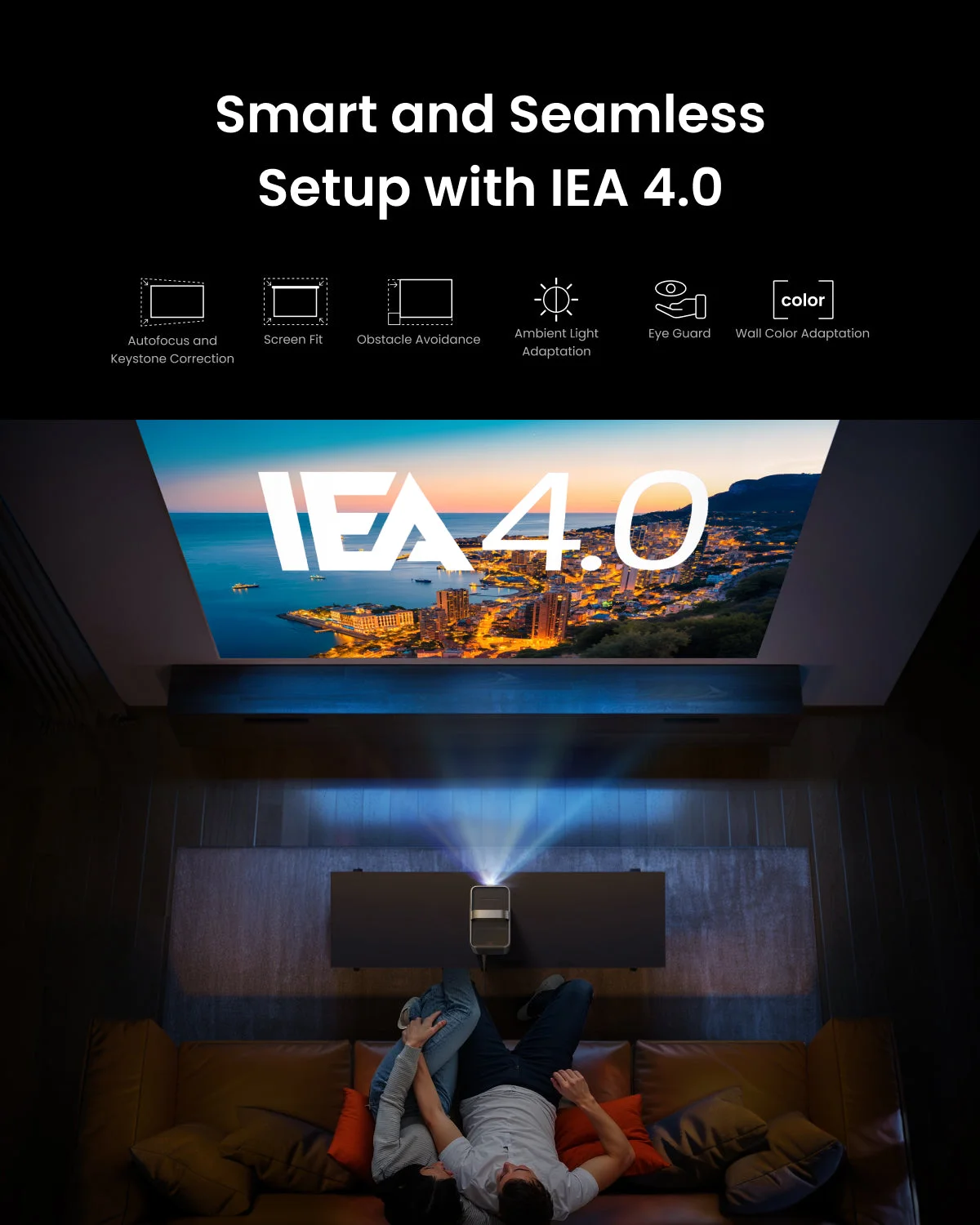
The 4K projectors available in the market today have various connectivity features such as HDMI, USB and wireless streaming. The HDMI 2.0 or 2.1 features are relevant in the connection of game consoles, laptops, or Blu-ray players with high resolutions. There are also projectors with inbuilt smarter capabilities including Netflix or Amazon Prime apps, and others use external streaming devices. Multi-purpose connectivity makes it easy to set up and compatible with future and existing devices.
Lamp Life and Maintenance
The lamps or light sources of projectors dictate the duration of your device to last before it needs to be replaced. Projectors that are laser-based have a longer lifespan and their brightness does not significantly diminish after some time, unlike the lamp-based projectors which might require replacement after a few thousand hours. The lifespan is increased by having regular maintenance, including cleaning of vents and filters, to avoid overheating. I found out that good maintenance did not only maintain brightness but also enhanced color stability with time.
Projector Type The type of projector depends on the specific projector types available in the market.Projector Type The type of projector is based on the types of projectors present in the market.
It is imperative to know what kind of 4k projector is so that you can match it to your requirements. DLP (Digital Light Processing) projectors are characterized by the sharpness of the image and high contrast, whereas the LCD (Liquid Crystal Display) projectors have much more vivid colors and more gradual transitions. Laser projectors are also very reliable in the long run and the brightness is also very consistent when compared to lamp projectors which are relatively cheap but need replacements. The decision you make will be based on your priorities on image quality, duration and cost.
Conclusion
Resolution is not the only thing to consider when choosing the appropriate 4K projector. The important ones are brightness, contrast ratio, color accuracy, throw distance, connectivity and type of projector. Considering these features with regard to your room size, lighting and intended purpose will guarantee a satisfactory viewing experience. Be it in home theaters, gaming or education presentation, a well selected 4K projector provides an excellent display, detail and long lasting enjoyment. These features are important to be considered during purchasing because it will guarantee that your investment will provide the highest value and a movie experience that suits your needs.
FAQs
1. What is the distinction between the true 4K and pixel-shifting 4K projectors?
Real 4K projectors have a resolution of 3840 x 2160 pixels, which allows the projector to be as sharp as possible, whereas pixel-shifting 4K relies on high-tech to emulate 4K, offering almost 4K images at a reduced price.
2. What is the number of lumens required to light up a bright room?
In rooms with moderate natural light, one should use a projector with a minimum of 2500 lumens to have clear and colorful images.
3. Are HDR projectors available in all 4K projectors?
Most of the new projectors come with HDR, which has improved contrast and color accuracy to create more realistic images.
4. Is it possible to have a small room with a short-throw 4K projector?
Yes, short-throw projectors are created to create huge images with a short distance thus convenient in apartments or small home theaters.
5. What is the duration of a 4K projector lamp?
The life of the lamps depends on the type of lamp, where laser projectors have a longer life than the traditional lamp. Periodic maintenance increases the life and maintains the image quality.