





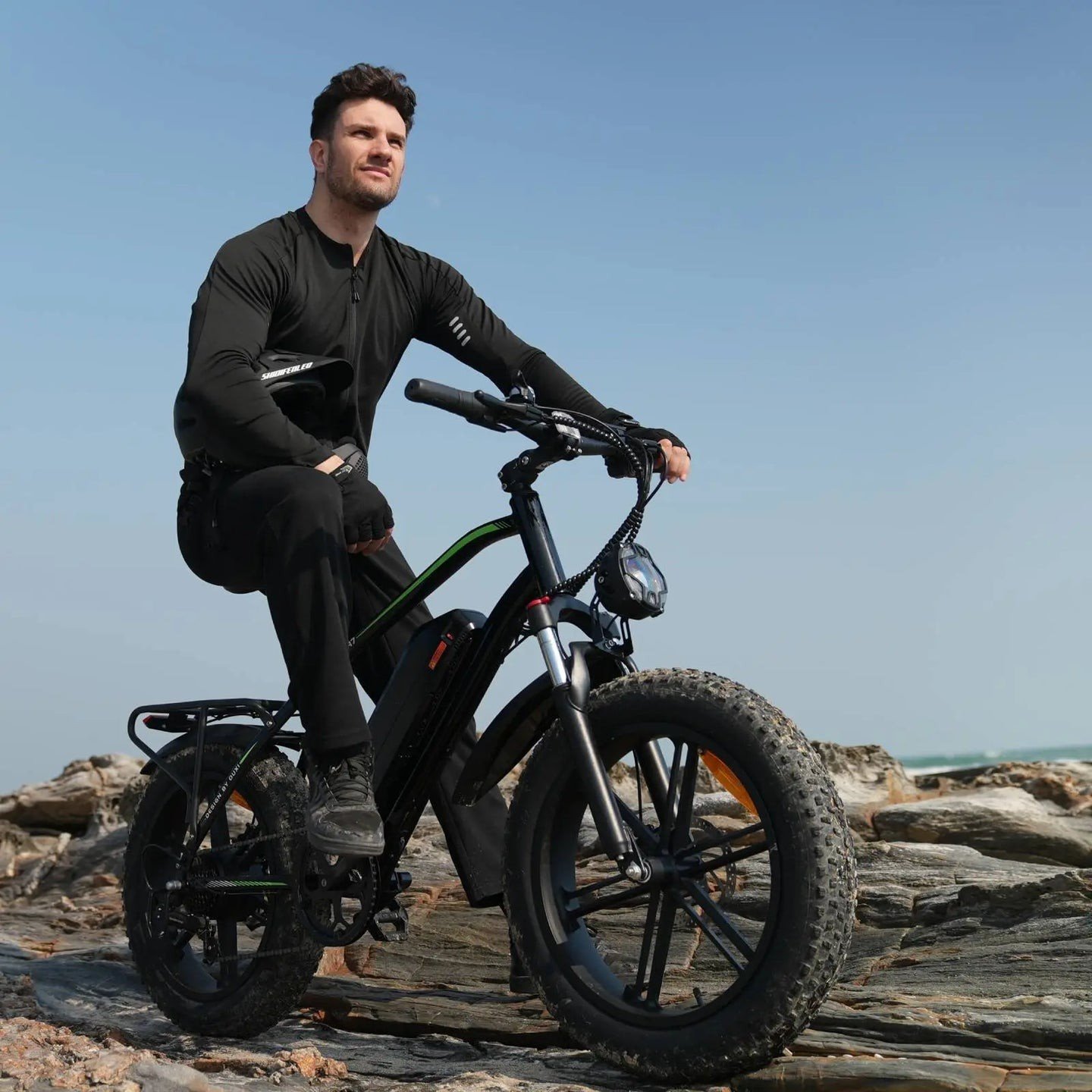
The concept of a fat tire electric bicycle used to be a niche, even experimental. It has now shifted to the mainstream of electric mobility discussions. A fat tire electric bike has ceased to be a matter of looks or innovation; it is a step towards versatility and confidence in riding. Wider tires alter the interaction of an electric bike with the ground and that one design decision has extensive consequences in terms of comfort, safety, and usability. Analytically, fat tire e-bikes react to actual conditions of riding, but not ideal conditions, and this is why they are becoming more popular.
During my experience of testing and observing the various types of electric bikes, the fat tire models have always attracted those riders who believe that speed is not important but control. This is a significant difference, particularly to the students and researchers who examine how design affects transportation behavior.
The Core Advantage of a Fat Tire Ebike
The fat tire ebike can be characterized by large tires, which are usually meant to enhance the contact with the road or trail. This increased contact enhances traction and stability, especially in rough or unstable surfaces. City streets are never ideal, and off-road tracks create even greater diversity. Small shocks are absorbed by fat tires and this minimizes vibration and fatigue to the rider in the long run.
Mechanically, this design distributes weight more evenly and this increases stability at lower speeds. This is important since most of the electric bike users waste a lot of time starting, stopping and maneuvering compared to riding at maximum speed. These trends are supported by the fat tire electric bike that provides a stable and comfortable ride experience.
Fat Tire Electric Bike Performance Beyond Speed
The electric bikes with fat tires change the topic of performance discussions that tend to revolve around the motor power or the highest speed. Control, adaptability and confidence are more critical to their performance. The wider tires enable the rider to ride on the sand, gravel, wet roads, and irregular urban roads with less reluctance.
This psychological impact of this stability is important based on personal experience of riding. Riders will be more relaxed and have a feeling of safety, this will prompt them to use it longer and more often. The behavioral outcome is relevant in the academic studies of sustainable transportation adoption, where comfort and perceived safety have a strong impact on long-term use.
Comfort and Ergonomics in Fat Tire Ebikes
Comfort is no longer a luxury feature, but it is the key to the inclusion of a bike into everyday life. The fat tire bike is inherently more comfortable due to the effect of rough surfaces. This is especially useful to those riders who ride to work daily or spend a lot of time on their bikes.
Fat tire electric bikes usually allow a more upright position to ride. This position will minimize the load on the back and shoulders, and this is also consistent with the results of the research on cycling ergonomics. In my experience, the riders who are more comfort-oriented tend to incorporate the use of electric bikes in academic life and employment without feeling burnout or physical pain.
Fat Tire Electric Bikes and Real-World Versatility
Versatility is one of the best reasons to have a fat tire electric bike. These bikes can work effectively in various settings without having to be adjusted all the time. The fat tire design is adjustable whether one is on a university campus, street in a city or on a recreational trail.
This flexibility minimizes the necessity of having various solutions to transportation. A versatile bike that works in all conditions is a convenient benefit to students and professionals who have to work with limited resources. Such versatility in mobility studies is usually associated with increased satisfaction and usage.
Fat Tire Electric Bike Use in Academic and Sustainable Contexts
The use of electric bikes in sustainability studies is becoming a more popular topic because they can serve as a viable alternative to short car journeys. Fat tire electric bikes bring another dimension to this discussion by increasing the range of places where electric bikes can actually be used. Their capability to deal with various surfaces makes them less dependent on cars in places where normal bikes may not perform.
Academically, the fat tire electric bikes are an inclusive design. They make them easier to the rider who might be hesitant on the traditional narrow-tire models. This inclusiveness promotes wider adoption, which is one of the objectives of sustainable urban planning and environmental policy discourses.
Personal experience with Fat Tire Electric Bikes
The most notable thing when using a fat tire ebike over a long period is the feeling of control. The bike is planted, even when the conditions are not ideal. This stability eliminates the burden on the mind and riders can concentrate on what is around them instead of having to constantly adjust their balance.
This confidence eventually changes the behavior of riding. Riders become more adaptable instead of avoiding some routes or weather conditions. This is one of the most powerful signs in my experience that a transportation tool will be used on a long-term basis.

Conclusion
The fat tire electric bike is a well-considered development of the electric mobility design. Instead of concentrating on extremes, it gives importance to stability, comfort, and flexibility. The fat tire ebike is a good example, based on personal experience and analytical observation, of how broader design thinking can result in improved real world performance. The fat tire electric bike is an attractive and future-proof product to students, researchers and ordinary riders who want a reliable and multi-purpose electric mobility solution.
FAQs
1. Why is a fat tire bike a better choice compared to an ordinary electric bike?
The wider tires that are used in a fat tire ebike enhance traction, stability and comfort particularly in uneven or slippery roads.
2. Can a fat tire electric bike be used in daily commuting?
Yes, a fat tire electric bike is certainly a good choice to use in everyday commuting because it is comfortable, balanced, and can be used in different road conditions.
3. Are fat tire electric bikes difficult to ride?
Fat tire electric bikes are typically easy to use, since they are usually more stable than narrow tire ones, and thus easier to control.
4. Do fat tire electric bikes help in achieving sustainability?
Fat tire electric bikes facilitate sustainable transportation by allowing electric movement in a broader range of settings, eliminating the need to use cars.