






Key Takeaways
- Local market knowledge has a direct impact on property values, risk reduction, and investment strategies.
- Economic indicators, neighborhood dynamics, and technological advancements play crucial roles.
- Understanding zoning laws and identifying emerging neighborhoods impacts long-term returns.
- Trust between clients and real estate professionals grows when local expertise is demonstrated.
Understanding the Impact of Location on Property Value
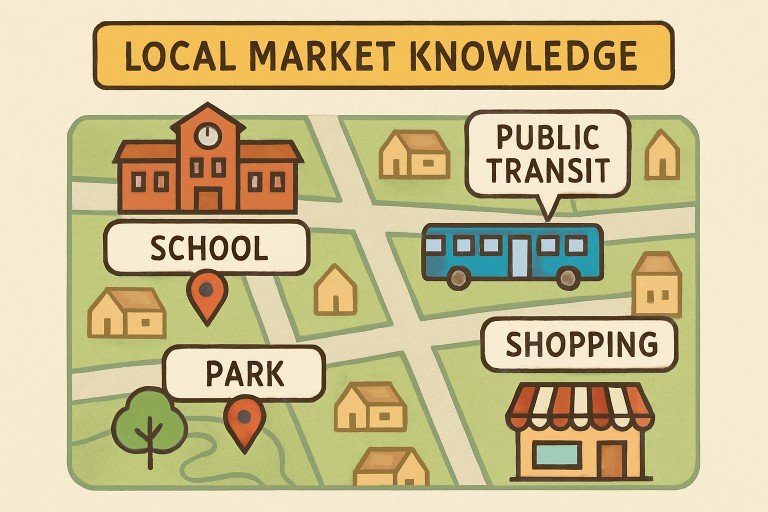
The real estate maxim “location, location, location” exists for good reason. The surroundings of a property—including proximity to public transit, shopping centers, green spaces, and cultural institutions—have a significant influence on desirability and future appreciation. This is particularly true in urban areas, where subtle neighborhood differences can translate into dramatic value shifts. Local experts, like New York City, NY real estate agents Elegran Real Estate, help buyers pinpoint these differences, offering critical guidance for both new homeowners and seasoned investors.
School district quality further amplifies this effect. Properties near high-performing schools often attract a premium, as families prioritize education and community safety. Additionally, the presence of amenities such as restaurants, parks, and medical facilities continuously shapes buyer preferences and market performance, making a deep understanding of local geography essential for maximizing returns and lifestyle benefits.
Economic Indicators and Their Influence on Real Estate
Real estate markets are inherently tied to local economic trends. Factors such as unemployment rates, average household income, and population growth or decline can significantly impact local neighborhoods. Strong economies tend to attract businesses and workers, which in turn fuels housing demand and subsequent appreciation. As seen in cities experiencing tech booms or large infrastructure projects, localized economic growth can transform entire districts over just a few years.
Conversely, areas impacted by industry closures, layoffs, or stagnant job markets often experience stagnating or declining housing values. Staying informed about regional employment trends and major development plans is vital. Investors, homebuyers, and developers must continually assess both the present stability and future trajectories of any local market.
The Role of Zoning Laws and Regulations
Zoning regulations, although sometimes overlooked, dictate the types of properties that can be developed in an area, the uses to which land may be put, and the types of businesses that can operate there. Local governments utilize these laws to regulate growth, preserve neighborhood character, and promote public welfare. For investors, understanding zoning laws uncovers hidden opportunities and potential challenges.
For example, a parcel of land zoned for mixed-use development may be much more valuable than an adjacent lot limited to single-family homes, offering a broader range of investment possibilities. Conversely, areas with restrictive zoning might limit upward growth, capping an investor’s return potential. Staying informed about potential rezoning or upcoming changes is a crucial component of a savvy real estate strategy.
Technological Advancements in Market Analysis
Technology has revolutionized the way real estate professionals and buyers analyze local markets. Tools such as Automated Valuation Models (AVMs), Geographic Information Systems (GIS), and big data platforms offer unprecedented access to trends, projections, and comparables. Even for those outside the industry, platforms like Zillow and Redfin provide layers of transparency that were previously hard to access.
These tools empower informed decision-making by allowing users to visualize demographics, price movements, and neighborhood trends at a granular level. For investors, leveraging technology can mean the difference between identifying an emerging hot spot early and missing key opportunities. The data-driven approach also minimizes the risk of emotional or speculative buying that can lead to losses.
Identifying Emerging Neighborhoods
Local market familiarity enables buyers and investors to get ahead of broader market trends by identifying neighborhoods on the cusp of transformation. Signs such as new transit lines, major employers relocating, or a surge in property renovations can indicate that an area is poised for growth. Getting in early can lead to significant appreciation before the market catches on.
For example, historically overlooked neighborhoods may rapidly gain popularity due to urban renewal projects or changing demographic preferences. In these cases, local insight is essential—not only to identify opportunities but also to gauge long-term sustainability and avoid overpaying in speculative cycles.
Mitigating Investment Risks
Every real estate decision involves a degree of risk, but deep local knowledge allows investors to mitigate many avoidable pitfalls. By analyzing crime reports, flood zone maps, future development plans, and community sentiment, investors can identify properties that are likely to lose value or experience delays.
Additionally, understanding plans for new roads, schools, or shopping centers grants insight into potential value enhancements or detractors years down the line. This risk-aware approach ensures that investment portfolios remain as secure and profitable as possible, even as markets shift.
Enhancing Negotiation Strategies
When buyers or sellers walk into negotiations armed with detailed local market information, they gain a clear advantage. Understanding the average days on market, recent sale prices of comparable properties, and current inventory allows parties to set realistic expectations and more effectively advocate for their interests.
Professionals with this knowledge can help clients avoid overpricing, underbidding, or falling for common market myths. Both sides benefit, resulting in smoother deals and a higher likelihood of post-sale satisfaction.
Building Trust with Clients
For real estate professionals, trust is built on the foundation of knowledge and transparency. Clients expect their agents or advisors to have insider knowledge of neighborhoods, market trends, and potential red flags. Delivering up-to-date, accurate insights not only impresses clients but also fosters lasting relationships that can lead to referrals and repeat business.
Ultimately, being recognized for local expertise is one of the strongest differentiators in a competitive real estate marketplace.
Final Thoughts
In every stage of real estate—whether buying, selling, or investing—local market insight is the cornerstone of smart decision-making. It ensures properties are accurately valued, risk is minimized, emerging opportunities are spotted early, and trust is built on solid advice. Whether you are a first-time buyer, seasoned investor, or professional agent, understanding the nuances of your market will empower you to navigate the complexities of real estate with confidence and achieve your objectives in any market environment.