






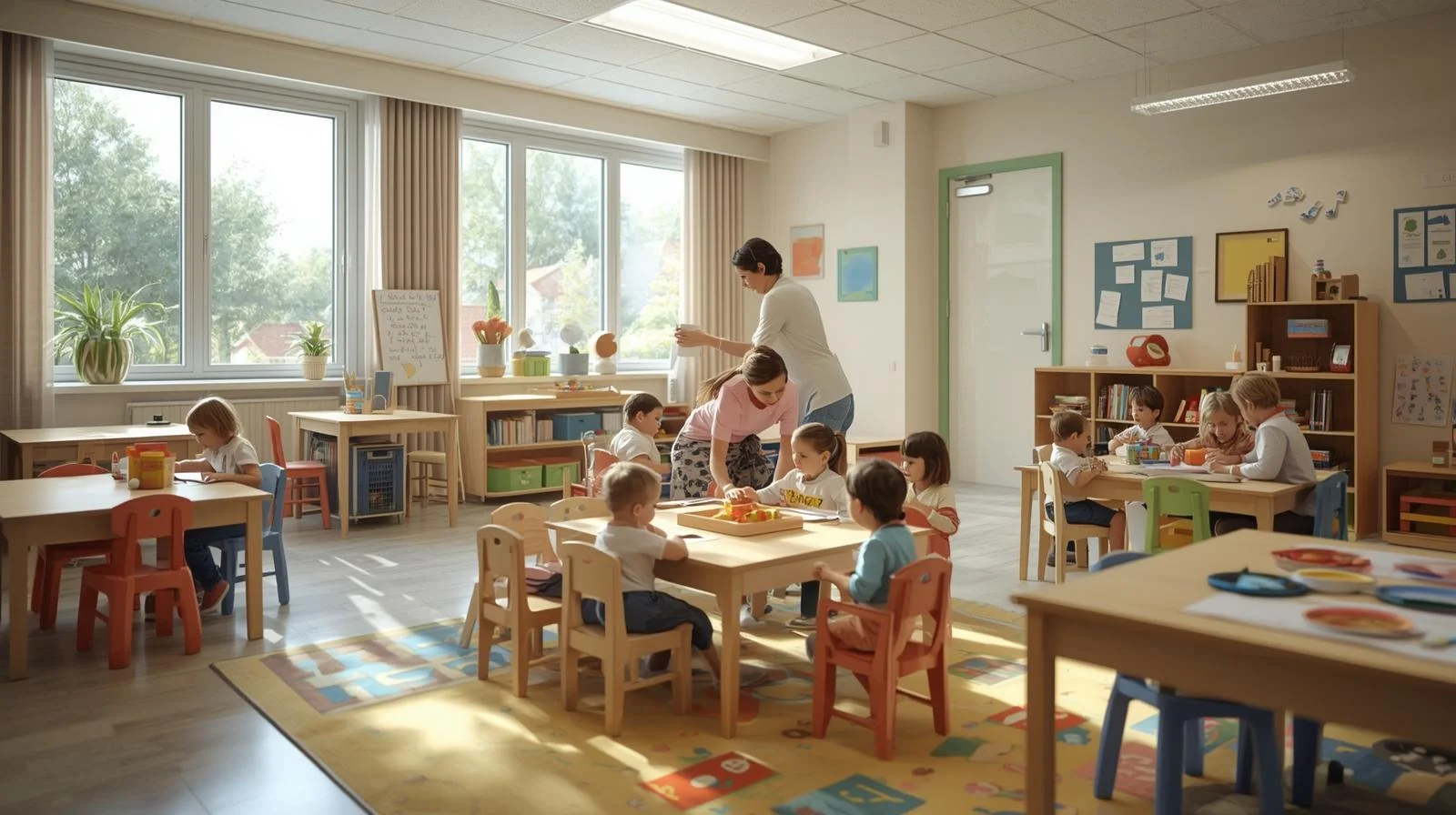
You want a safe, stimulating place where your child can learn basic social, language, and self-care skills before kindergarten. A nursery school gives your child structured play, guided activities, and teacher-led routines that build early learning foundations and ease the transition to formal school.
This article will explain what a nursery school typically offers and how programs differ in schedule, curriculum, and approach so you can match options to your child’s needs. You’ll find practical guidance for evaluating staff qualifications, classroom environment, and daily routines to help you choose the right fit.
What Is a Nursery School?
A nursery schools gives young children structured learning opportunities, supervised play, and early socialization. You’ll find specific goals around language, motor skills, and emotional development guided by trained staff.
Definition and Purpose
A nursery school is an educational setting for children typically before compulsory schooling, focused on early learning rather than only custodial care. You attend programs designed to build basic literacy and numeracy concepts, develop fine and gross motor skills, and introduce routines that prepare children for formal kindergarten.
The purpose centers on cognitive, social-emotional, physical, and creative development. Staff use play-based and teacher-led activities to encourage curiosity, turn-taking, and problem solving. You should expect intentional lesson plans, progress observations, and communication with caregivers about milestones and areas needing support.
Key Features of Nursery Schools
Nursery schools combine planned activities, free play, and social interaction within a safe, child-centered environment. You’ll see small-group sessions for storytime, sensory tables for hands-on exploration, art projects for fine motor control, and outdoor play for gross motor development.
Typical staffing includes early childhood educators with qualifications and a defined staff-to-child ratio to ensure supervision. Many programs offer structured schedules, snack and nap routines, developmental assessments, and parent-teacher communication. You can also find specialized supports such as language development groups or partnerships with speech and occupational therapists.
Age Groups Served
Nursery schools most commonly serve children from about 2 to 5 years old, though some programs accept children as young as 18 months. You’ll find distinct groupings within a single program—toddlers (18–30 months), younger preschoolers (2–3 years), and pre-kindergarten (4–5 years)—so activities match developmental needs.
Group sizes and curriculum intensity typically increase with age. For example, toddler rooms emphasize basic routines and sensory play, while pre-kindergarten classes focus more on early literacy, number sense, and transitional skills for kindergarten entry.
Selecting the Right Nursery School
You should focus on safety, staff quality, daily routines, and how the school communicates with families. Practical details like location, hours, fees, and the enrollment steps determine whether the nursery fits your schedule and budget.
Factors to Consider
Look for staff qualifications and ratios first. Confirm that lead teachers hold early childhood credentials and that the center meets your state’s staff-to-child ratio—this affects supervision and individualized attention.
Inspect the physical environment. Check for secure entry points, age-appropriate equipment, clean diapering/toileting areas, and visible emergency procedures. Outdoor play space should be fenced and well-maintained.
Review daily routines and curriculum. Ask how much free play, guided activities, nap time, and outdoor time children get each day. Prefer programs with a predictable schedule and developmentally appropriate goals for language, motor skills, and social interaction.
Verify health, safety, and licensing. Ensure the nursery holds current licensing, background checks are performed, and immunization/illness policies are clear. Also note meal/snack policies and how allergies or medications are handled.
Questions to Ask During a Visit
Ask about staff turnover and how long lead teachers have worked at the center. High continuity usually means stronger relationships and consistency in care.
Request to see a sample daily schedule and examples of recent activities or lesson plans. Ask how the staff assesses progress and shares observations with parents—daily notes, apps, or periodic conferences?
Observe teacher-child interactions for warmth, responsiveness, and clear guidance. Ask how behavioral issues are managed and whether positive guidance or time-outs are used.
Clarify logistics: pick-up/drop-off windows, late-fee policies, holiday closures, and how substitute teachers are introduced. Ask to review emergency plans, first-aid certification of staff, and recent inspection reports.
Enrollment Processes
Confirm required documents and the timeline for enrollment. Typical documents include proof of age, immunization records, emergency contacts, and parent agreements. Ask if there’s a waitlist and how spots are prioritized.
Understand fees, deposits, and refund policies. Get written details for tuition, registration fees, supply fees, and the policy for absences or withdrawals. Ask whether sibling discounts or subsidy programs apply.
Check orientation and transition supports. Find out if the nursery offers gradual entry, a meet-and-greet with your child’s teacher, or a parent handbook. Know the start date, trial periods, and how you’ll receive daily updates once enrolled.