






On paper, scaling your electrical business looks like a dream. More trucks, bigger contracts, and steadier revenue? Sign me up!
But let’s be real. In reality, growth often feels like juggling chainsaws while riding a unicycle. Before the profits jump, the chaos jumps first. Jobs pile up, miscommunications slip through the cracks, and those tiny inefficiencies that used to be manageable? They’re now costing you real, hard-earned cash.
If this sounds familiar, don’t panic! You aren’t alone. Most electrical contractors hit this same wall. You’ve got the demand and the skilled sparkies. What you’re missing is the structure. Without clear systems, trying to scale turns your day into a non-stop circus of phone calls, frantic texts, and messy spreadsheets.
Let’s talk about why this happens and, more importantly, how to fix it before you pull all your hair out.
Why Growth Exposes Every Single Weakness We happen and not
Remember the “good old days” when running your business was simple just you and maybe one helper? Your brain was the system. You knew every job’s status, who owed you money, and even that Mrs. Jones’ dog barks but doesn’t bite.
That approach works when you’re small. But as you grow, adding more techs, jobs, and customers, that mental map falls apart. Suddenly, you’re juggling more than wires and breakers; you’re drowning in coordination.
Here’s what typically unravels as you grow without the right tools:
- Scheduling becomes chaos: you or your dispatcher are constantly shuffling whiteboards, calendars, and chat apps. One delayed job ripples through the day, leaving you double-booked and clients upset.
- Communication breaks down: Techs are texting, calling, and emailing different addresses. Important details get lost, miscommunicated, or duplicated.
- Paperwork piles up: Estimates, work orders, and invoices bounce between the field and office. Missing signatures and messy handwriting slow everything down.
- Accountability fades: When things go wrong, it’s tough to pinpoint why. Was it poor training, a bad process, or just a misstep?
The truth is, growth doesn’t create these problems; it magnifies them.
The Trap of Running on “Tribal Knowledge”
A lot of electrical businesses run on what we call “tribal knowledge.” That’s a fancy way of saying the process lives in people, not in systems.
- Your lead electrician knows how the complex installs are done.
- Your office manager knows the secret code to make the schedule work.
- You know exactly how to talk down the difficult customers.
This works great… until it doesn’t. What happens if your lead tech gets the flu? Jobs stall. What if your dispatcher gets overwhelmed? The schedule falls apart. If you try to hire a new guy, training takes weeks because nothing is written down. You have to explain everything verbally.
Scaling without systems turns your business into a house of cards balanced on the shoulders of a few key people. That is risky, stressful, and honestly? It puts a hard cap on how big you can actually get.
Why Spreadsheets and App-Hopping Don’t Work
At first, most contractors try to solve the chaos with tools they already know. You might grab Google Calendar for scheduling, Excel for job tracking, WhatsApp for team messages, and QuickBooks for invoicing.
On the surface, this feels organized. “Look at me, I’m digital!” But in practice? It creates more friction than a rusted hinge. Your schedule doesn’t talk to your estimates. Your text messages aren’t tied to specific job files. Your invoices don’t reflect real-time updates from the field.
You end up spending more time jumping between apps than actually running your business. That constant context switching slows down decisions, increases errors, and wears your team down. You didn’t start a business to become a professional data-entry clerk, right?
What “Systems” Actually Mean (It’s Not Scary!)
When I say “systems,” don’t glaze over. I’m not talking about 500-page corporate manuals or boring meetings. For a growing electrical company, a system just means having a clear, repeatable recipe for doing the core stuff.
A strong foundation typically looks like this:
- A Single Source of Truth: One place for jobs, customers, and schedules. No more hunting through emails.
- Standardized Templates: Every tech collects the same info on every job. No guessing games.
- Clear Handoffs: Everyone knows when the baton passes from the office to the field and back again.
- Consistent Follow-Up: A set process for chasing estimates and unpaid invoices so you actually get paid.
When these pieces are in place, scaling becomes way smoother. You stop reacting to chaos and start managing predictable workflows.
How Modern Tools (Like Field Promax) Clean Up the Mess
This is where purpose-built field service platforms come in to save the day. Instead of stitching together five different apps with duct tape and hope, smart electrical contractors move to an all-in-one system.
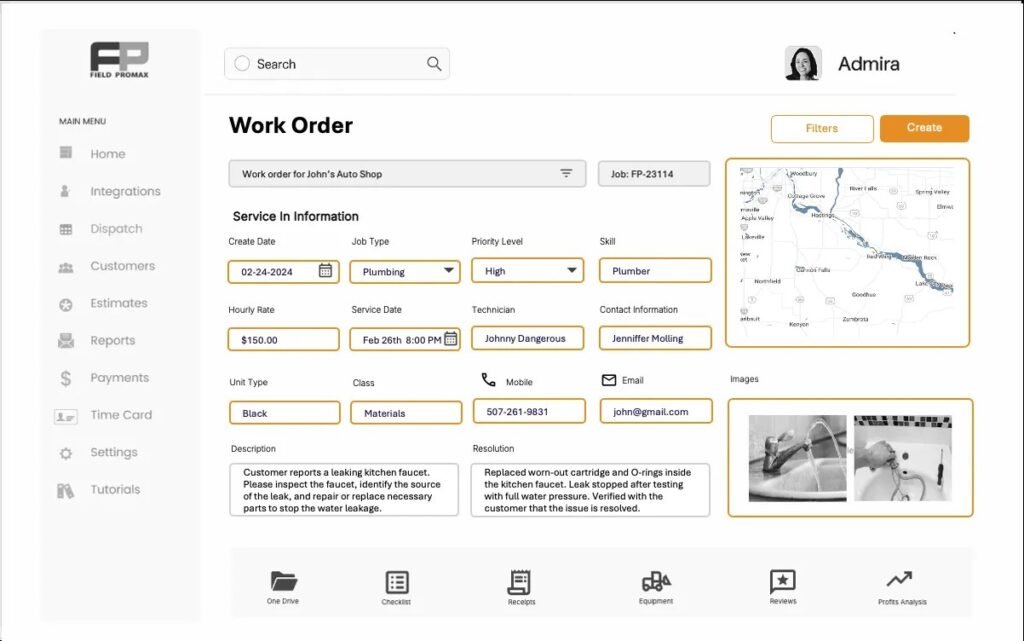
Take Field Promax, for example. With tools like this, dispatchers can see all jobs, technicians, and time slots in one clean dashboard. That makes it super easy to spot conflicts, balance the workload, and keep the day running smoother than a freshly oiled machine.
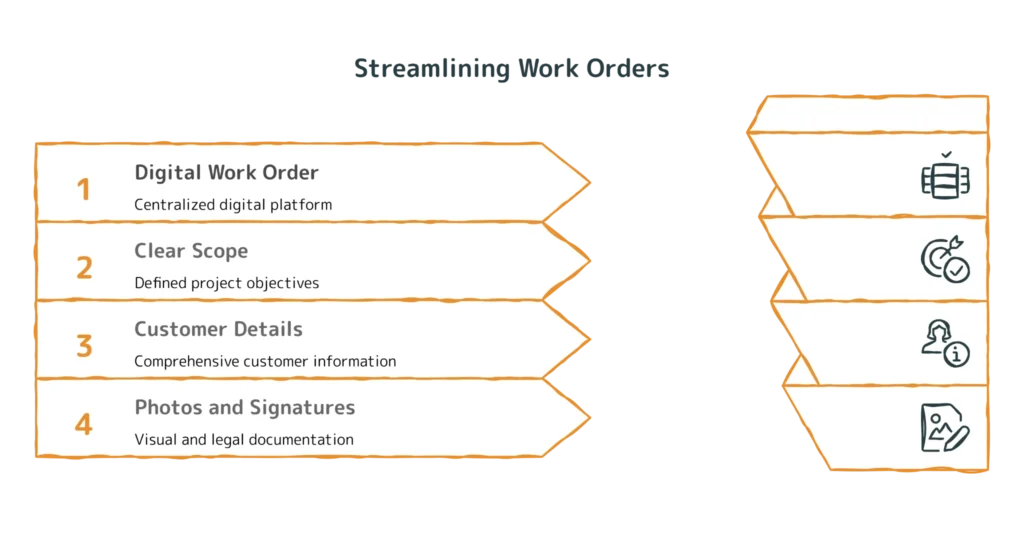
Your technicians in the field? They get access to digital work orders on their phones. These outline the scope of work, customer details, and job history. No more blurry photos of handwritten notes or last-minute calls asking, “Wait, what am I supposed to install here?” From your perspective as the owner, this kind of structure creates visibility. You can see which jobs are making you money, which techs are hustling, and where the bottlenecks are hiding.
Scaling is About Clarity, Not Just Capacity
Many business owners assume scaling is just about getting more customers. But really? It’s often about getting clearer.
- Clarity in scheduling reduces those “oops, we’re late” calls.
- Clarity in communication cuts down on frustration.
- Clarity in processes means you don’t have to clone your best employee to get things done.
When your team knows exactly how things should be done, growth feels less chaotic and more intentional.
Common Growing Pains (And How Systems Fix Them)
Let’s look at a few real-world scenarios that probably sound painfully familiar.
Scenario 1: “We double-booked again.”
- The Fix: This happens when scheduling lives in multiple places. A centralized job calendar prevents overlapping assignments and gives everyone the exact same view of the day.
Scenario 2: “The customer says we promised something different.”
- The Fix: Misaligned expectations usually come from poor documentation. Standardized digital work orders create a clear record of exactly what was agreed upon.
Scenario 3: “Why did this job take so long?”
- The Fix: Without data, you’re just guessing. A unified system makes it easier to review job timelines and spot where things slowed down.
Stop Waiting! Waiting is Expensive
Here is the kicker: Some owners delay adopting systems because they feel “too small” or “too busy.” Ironically, that is exactly when systems matter the most!
Every new hire, new van, or new contract adds complexity. The longer you wait, the more messy habits you have to undo later. Implementing systems earlier gives you room to grow without constant firefighting. Plus, if you ever want to sell the business one day, documented systems make your company look a whole lot more attractive to buyers.
Ready to Ditch the Chaos?
Scaling an electrical business doesn’t have to feel like a disaster movie. With the right structure from a tool like Field Promax, growth can feel controlled, efficient, and, dare I say it, even enjoyable.
The goal isn’t to eliminate flexibility. It’s to create a framework that supports your team instead of slowing them down. When your operations are organized, your electricians can focus on quality work, your office can focus on happy customers, and you can focus on strategy instead of putting out fires.
That is what real, sustainable scaling looks like.
Frequently Asked Questions
1. When should I start using formal systems?
Most contractors feel the strain with 4–8 technicians or 25–40 jobs per week. If you’re juggling multiple apps or relying on memory, it’s time to formalize your processes.
2. Will systems slow my electricians down?
Nope! When set up properly, good systems actually save time. Digital work orders and clear schedules reduce back-and-forth calls and confusion. This means your techs can finish jobs faster and get home sooner.
3. Do I need to change my entire business overnight?
The most effective approach is usually gradual. Start with scheduling and job management, then standardize work orders. Avoid shocking the system; focus on steady improvements.
4. How do systems actually help with scaling?
They create consistency. When every job follows the same process, it becomes much easier to onboard new technicians and take on more work without disruptions.