
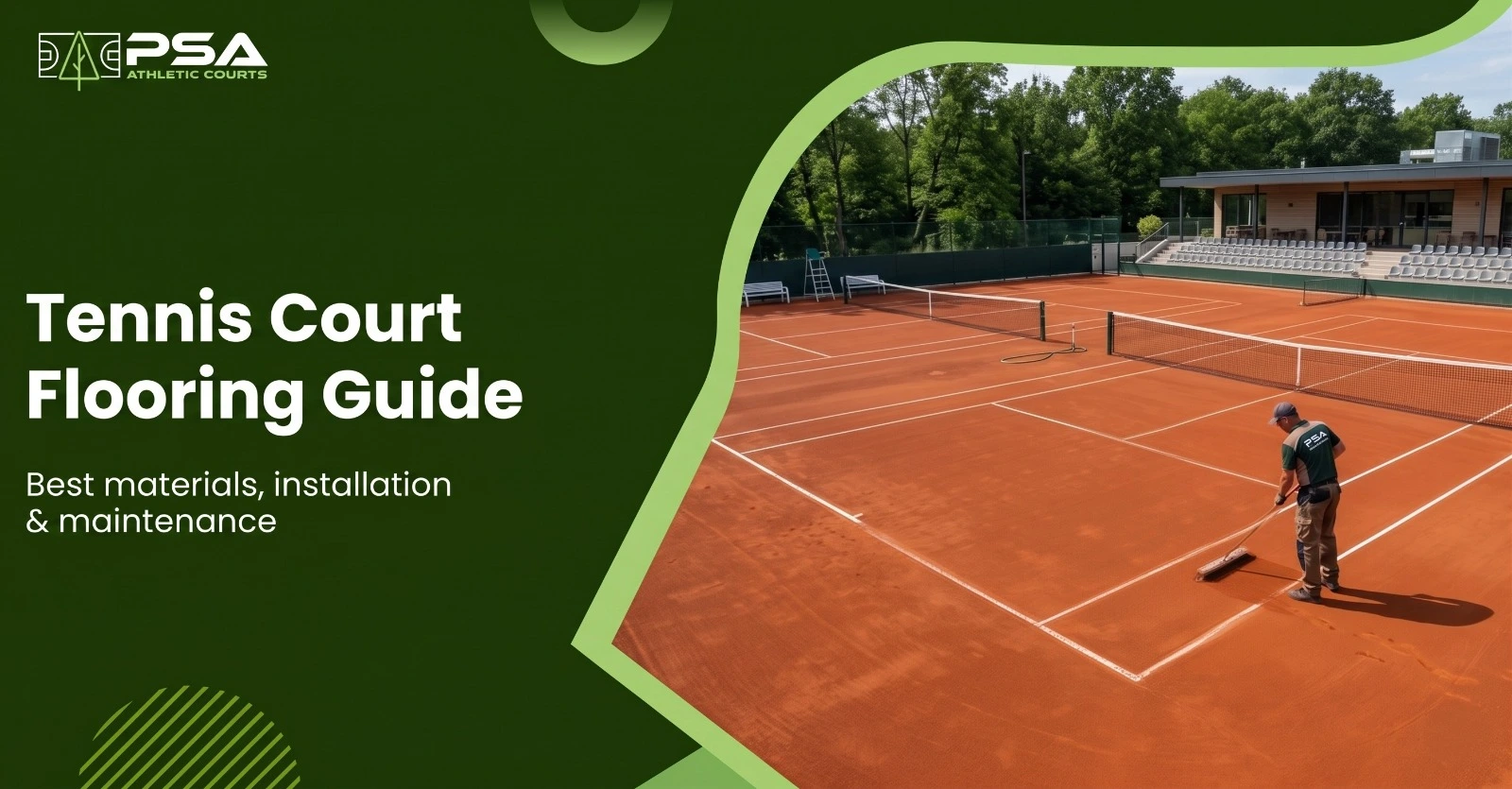
Choosing the right tennis court flooring is one of the most important decisions in court construction. The flooring system directly impacts gameplay, player comfort, durability, and long-term maintenance requirements.
Whether you’re building a residential court, school facility, or sports complex, understanding different tennis court flooring materials helps ensure the surface performs consistently over time.
This guide breaks down the best flooring options, explains installation considerations, and outlines maintenance strategies for long-term performance.
1. Acrylic Hard Court Flooring
Acrylic hard courts are the most common surface for both indoor and outdoor tennis courts.
Features:
- Applied over asphalt or concrete base
- Consistent ball bounce
- Customizable speed and texture
- Cost-effective and durable
Best For:
- Residential courts
- Schools and recreational facilities
This surface is widely used due to its balance of performance and maintenance efficiency.
2. Cushioned Acrylic Flooring Systems
Cushioned systems add layers of shock absorption beneath the acrylic coating.
Features:
- Reduced joint impact
- Enhanced player comfort
- Improved long-duration play
Best For:
- Training facilities
- Clubs with high player usage
These systems are increasingly popular for indoor tennis court flooring due to their comfort advantages.
3. Synthetic Turf Tennis Flooring
Synthetic turf offers a softer playing surface and aesthetic appeal.
Features:
- Reduced impact on joints
- Good drainage (for hybrid indoor/outdoor setups)
- Slower ball speed
Considerations:
- Requires periodic maintenance
- Not ideal for competitive-level play
This option is often used for recreational courts.
4. Modular Sports Flooring Systems
Modular tile systems provide flexibility and quick installation.
Features:
- Interlocking panels
- Easy replacement of damaged sections
- Consistent traction
Best For:
- Multi-sport facilities
- Indoor recreational courts
These systems are ideal when versatility and ease of maintenance are priorities.
Key Factors When Choosing Tennis Court Flooring Material
Selecting the right tennis court flooring material depends on:
- Frequency of use
- Indoor vs outdoor setup
- Budget and lifecycle cost
- Climate conditions
- Desired playing speed
According to experienced court specialists such as Pine State Courts, flooring selection should always balance performance with long-term durability rather than focusing only on initial cost.
Tennis Court Flooring Installation Process
Proper installation is critical for long-term performance.
Typical Steps:
- Site preparation and grading
- Base construction (asphalt or concrete)
- Surface leveling
- Application of coating or flooring system
- Line marking and finishing
Working with experienced tennis court designers ensures that installation meets performance standards and prevents structural issues.
Maintenance Guide for Tennis Court Flooring
Even the best flooring requires consistent maintenance.
Routine Maintenance:
- Cleaning debris and dirt
- Inspecting cracks or wear
- Monitoring drainage
Periodic Maintenance:
- Resurfacing every 3–6 years
- Repainting lines
- Repairing damaged areas
Following a professional tennis court maintenance guide helps extend the life of the court and maintain play quality.
Indoor vs Outdoor Flooring Considerations
Indoor Courts:
- Focus on cushioning and comfort
- Require proper ventilation
- Less exposure to weather
Outdoor Courts:
- Require UV-resistant coatings
- Need proper drainage systems
- Must withstand temperature changes
Choosing the right flooring depends heavily on the environment.
Choosing the Right Flooring Partner
A professional construction team ensures:
- Correct material selection
- Proper installation
- Long-term durability
- Cost-efficient planning
For property owners planning new courts, experienced teams like Pine State Courts provide tailored solutions that align flooring systems with usage needs and site conditions.
Final Thoughts
Tennis court flooring is more than just a surface, it’s a key factor that defines how the game is played and how long the court lasts. From acrylic systems to cushioned and modular flooring, each option offers unique advantages depending on usage and environment.
By understanding flooring options, installation requirements, and maintenance strategies, you can build a tennis court that delivers consistent performance and long-term value.