
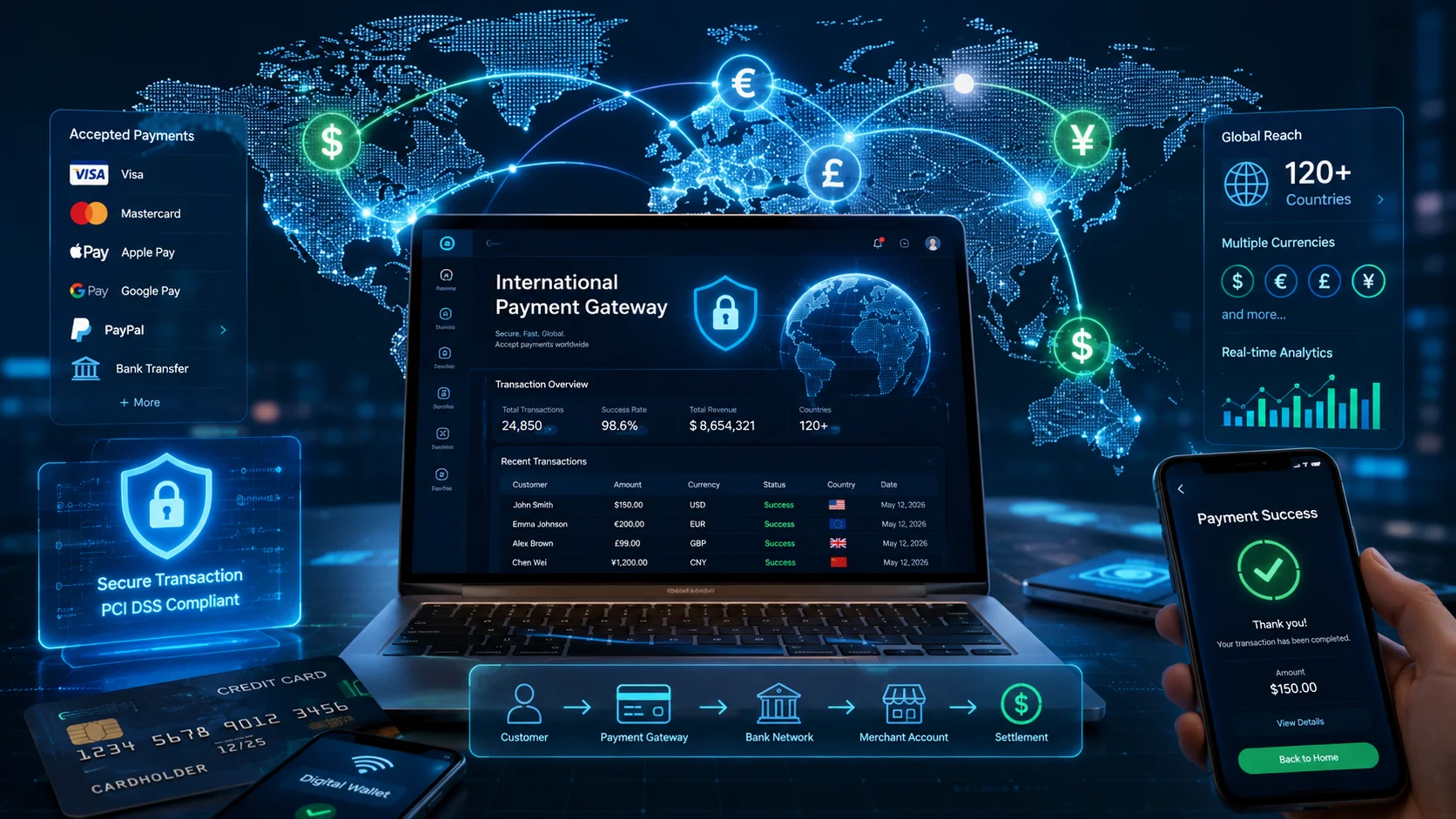
Cross-border digital commerce is expanding at an unprecedented speed. In 2026, global digital payment transactions are projected to reach around 2.8 trillion, reflecting the rapid adoption of real-time systems, digital wallets and international e-commerce.
For businesses selling internationally, processing payments efficiently is critical to keeping customers satisfied and increasing the number of completed transactions. An international payment gateway is a digital system that enables merchants to accept payments from customers worldwide, in different currencies, securely and reliably.
By handling currency conversion, fraud prevention and integration with multiple networks, these gateways make global transactions seamless. Let’s look at how international payment gateways work and why they are essential for businesses expanding across borders.
The process behind international payment gateway transactions
An international payment gateway helps businesses accept payments from customers in different countries. It connects your website or app with banks, payment networks and financial systems across the world.
From the moment a customer enters their payment details to when the money reaches your account, the gateway manages every step securely and quickly.
1. Connects your business to global payment networks
When a customer decides to pay, the international payment gateway first captures their payment details, such as card information or wallet selection. It then connects your website or app to global payment networks and banks.
These networks include card providers and issuing banks that verify the payment. The gateway securely sends the payment request to the appropriate system based on the customer’s location and chosen payment method.
This connection ensures that customers from different countries can complete transactions without facing compatibility issues. A well-connected gateway improves payment acceptance rates and ensures a smoother checkout experience for international users.
2. Converts currencies in real-time
For international transactions, an e-commerce payment gateway supports Dynamic Currency Conversion (DCC). This allows customers to pay in their preferred currency while the system automatically converts it into the business’s base currency.
This feature ensures smooth cross-border payments, avoids manual conversion errors and improves the checkout experience for global customers.
When a customer makes a payment, the gateway calculates the amount using the latest foreign exchange rates and displays the correct value. This ensures that the customer knows exactly how much they are paying in their local currency.
At the same time, the business receives the payment in its preferred currency. This removes the need for manual conversion and reduces errors. Real-time currency conversion also improves transparency and builds trust with global customers.
3. Verifies and authorises the payment
Once the payment details are submitted, the international payment gateway sends an authorisation request to the customer’s bank. This step checks whether the payment details are correct and whether the customer has enough balance or credit available.
The bank reviews the request and sends back a response within seconds. If everything is valid, the transaction is approved. If there is an issue, such as insufficient funds or incorrect details, the payment is declined.
This step ensures that only valid transactions are processed, reducing the risk of failed payments and improving overall reliability.
4. Ensures secure and compliant transactions
Security is one of the most important parts of international payments. The international payment gateway adheres to the Payment Card Industry Data Security Standard (PCI DSS) to protect customer information.
It also uses tokenisation, which replaces sensitive card details with secure codes so that actual data is not exposed during the transaction. Fraud detection systems monitor every payment in real time to identify unusual patterns or suspicious activity.
These security measures protect both the business and the customer. At the same time, they are designed to operate in the background, allowing genuine customers to complete their payments without unnecessary delays.
5. Settles funds into the merchant account
After the payment is approved, the international payment gateway completes the settlement process. This is the step where the money is transferred from the customer’s bank to the merchant’s account.
The gateway works with banking systems to ensure that the funds are processed correctly and reach the business within the expected time. It also keeps a record of all transactions.
Businesses can access dashboards and reports to track payments, refunds and settlements. This visibility helps in better financial planning and ensures that international transactions are managed efficiently.
Simplify global payments with the right international payment gateway
Understanding how an international payment gateway works helps businesses make better decisions when expanding across borders. From handling currency conversion to ensuring secure and reliable transactions, each step plays a role in delivering a smooth payment experience.
As global commerce continues to grow, businesses need systems that are easy to integrate, scalable and built for high transaction success. Choosing the right setup can reduce payment failures and improve customer confidence at checkout.
Payment gateway providers like Pine Labs Online offer the infrastructure and integration capabilities needed to support seamless international payments. Taking the right approach today can help businesses grow faster and manage cross-border transactions more efficiently.