The old office setup is finished. Most companies ditched it for good. Remote and hybrid setups now sit at the center of how work gets done. Managers scramble to make it stick. Teams spread across cities and time zones rarely meet face to face. That’s the new normal.
Companies pulling ahead lean on remote workers’ time tracking that actually helps instead of hovering. They also measure output against something sharper than old gut checks. Plenty now reference the Real Productivity Index at https://controlio.net/blog/the-real-productivity-index.html to cut through the noise.
These outfits focus on a handful of things that matter. Here’s what separates them.
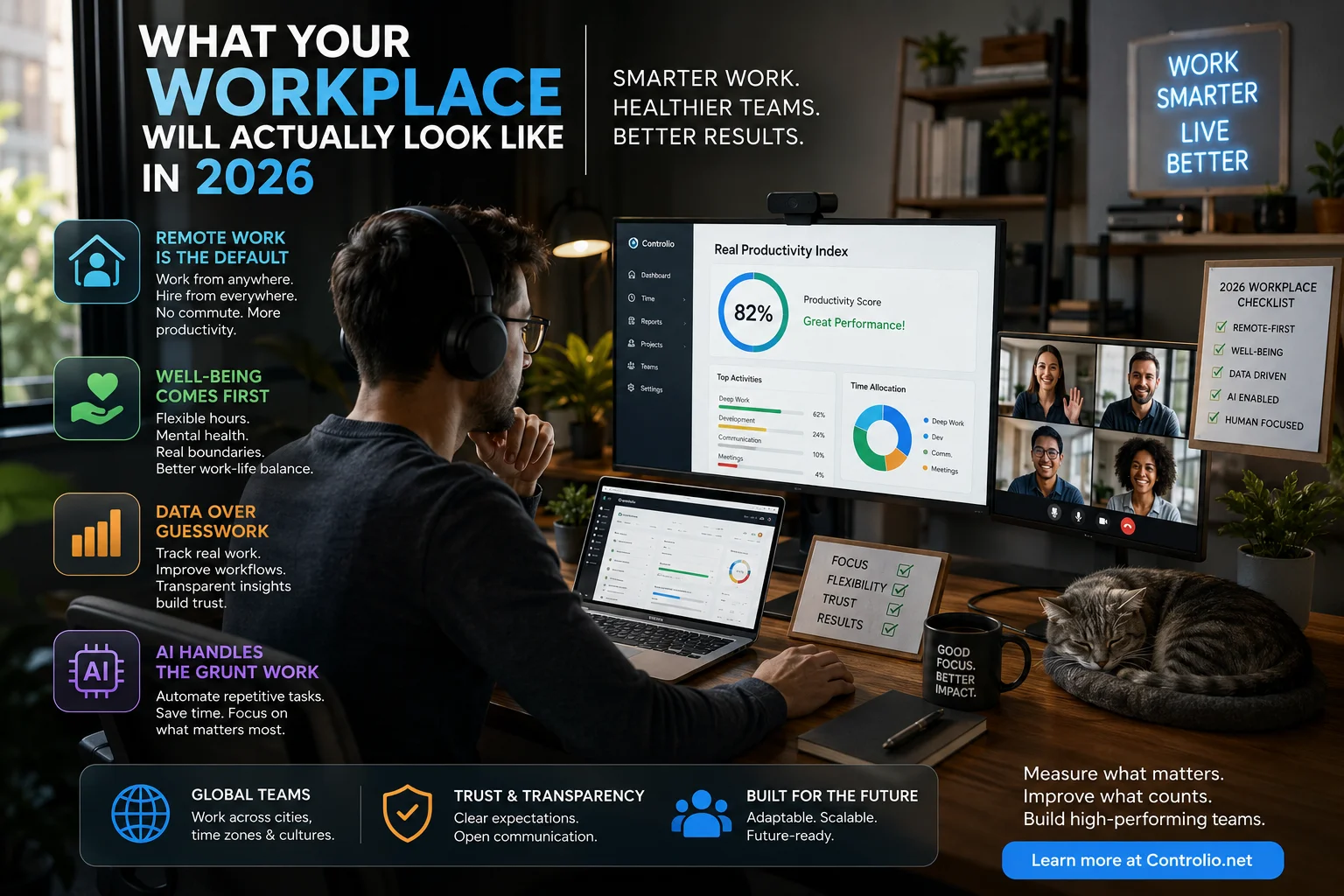
Remote work became the default years ago
Five years back, remote setups felt temporary. Now they define operations. People skip the commute and deliver more. Companies slash rent costs. Talent searches stretch from Portland to Pune without issue.
Yet distributed teams bring friction. No quick desk check-ins. Fewer hallway sparks. The teams that thrive treat communication and visibility as deliberate systems, not afterthoughts. They pick tools that surface real progress instead of manufacturing oversight theater.
The difference shows up fast. Smart groups hunt bottlenecks, not slackers. They fix workflow gaps before deadlines slip.
Burnout finally gets real attention
Companies spent years slapping “wellness” stickers on packed calendars and 7 AM stand-ups. Employees started walking. Mental health and real boundaries moved from nice-to-have to retention must-haves.
Leaders who get it stopped pretending. Someone needs 11 AM to 7 PM hours? Approved. Three days to reset after a heavy push? Granted. The pattern is clear: rested people ship better work.
You see it in retention numbers. Teams with genuine flexibility lose fewer high performers. The old “always on” culture quietly costs more than anyone admits.
Data replaced guesswork on productivity
Managers once built reviews around “Karen looked busy.” That approach collapsed. Now numbers tell the story: time on core tasks, where projects stall; who drowns in meetings versus who actually moves work.
Transparency decides success here. Hide the data and trust tanks. Share the why and how, and people lean in. They want visibility into their own patterns too.
Controlio software nails this balance for many teams. It shows workflow reality without turning into Big Brother. Managers spot overload early. Teams adjust before small issues snowball.
AI handles the grunt work
AI didn’t replace humans. It swallowed the soul-crushing parts. Scheduling, basic reports, email triage, repetitive analysis. What once took hours now finishes in minutes.
That shift frees brainpower for actual thinking and problem-solving. Yet dumping AI everywhere without guardrails creates fresh headaches. You still need humans reviewing outputs and setting direction.
The companies doing this well treat AI as a junior teammate. Great at narrow tasks. Terrible at judgment calls. Keep oversight where it counts.
Edge cases that actually test these setups
Global teams expose the cracks fast. One developer in Berlin follows strict GDPR rules while their counterpart in Texas operates under lighter notice requirements. Blanket policies fail here. You adjust per region or watch compliance issues pile up.
Hybrid schedules create another mess. Office days feel optional until promotion time. Teams that spell out expectations in writing dodge the quiet resentment. Others watch good people drift away.
Scaling adds pressure too. Tools that worked for 20 people start lagging at 200. Data volumes grow. False alerts multiply. The fix involves layered review: automated flags first, then human spot-checks on patterns only.
What actually moves the needle
Build systems around remote-first realities instead of bolting them onto old office habits. Take well-being seriously because it directly hits output. Use data to improve workflows, not police hours. Let AI eat the boring tasks while humans steer strategy.
The workplace already changed. It won’t flip back. Companies that treat 2026 like the present, not some future experiment, stay ahead. They combine visibility tools with real trust. Everything else just creates more noise.