
Key Takeaways
- Stainless steel’s versatility and durability make it indispensable across various industries.
- Recent advancements, such as PVD coatings, are enhancing the performance and sustainability of stainless steel products.
- The global stainless steel market is projected to grow significantly, driven by demand from the construction, automotive, and energy sectors.
Introduction
Stainless steel has established itself as an essential material in modern manufacturing and construction. Its remarkable strength, corrosion resistance, and sleek appearance have made it the backbone of countless products and structures around the world. As industries search for materials that combine reliability, longevity, and eco-friendliness, stainless steel continually rises to the challenge. Companies like Specialty Steel play a key role in providing innovative solutions that support evolving industry needs.
The enduring popularity of stainless steel is no accident. From large-scale infrastructure projects to everyday kitchen utensils, its flexibility in application is virtually unmatched. Technological progress enables stainless steel to meet the growing needs of sectors such as construction, automotive manufacturing, and medical technology, ensuring its relevance for years to come.
Stainless steel’s reputation for strength and visual appeal has led to its adaptation to new challenges as industries increasingly focus on sustainable and responsible production. Now, cutting-edge coating technologies and refined manufacturing practices are empowering the material to align with modern sustainability goals.
Stainless Steel in Modern Industries
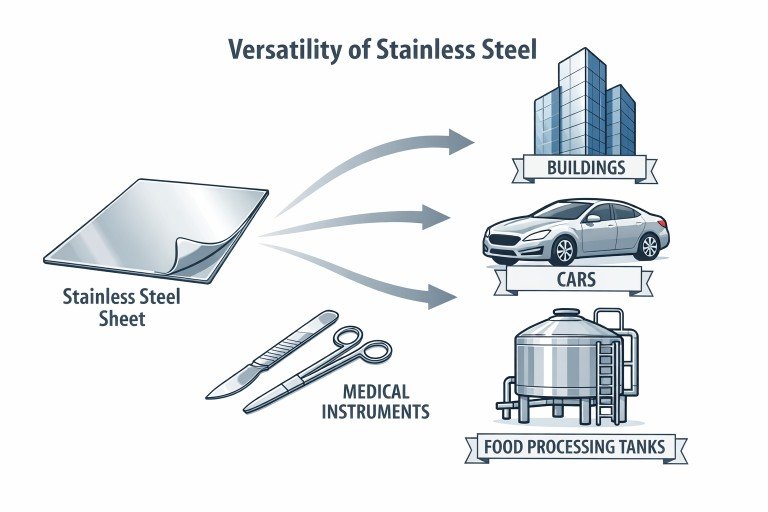
The adaptability of stainless steel supports its widespread use in several major industries:
- Construction: Stainless steel is a material of choice for building facades, bridges, roofing, and load-bearing structures. Its corrosion resistance delivers longevity, while its clean look aligns with the modern architectural aesthetic.
- Automotive: This industry relies on stainless steel for exhaust systems, decorative trims, and safety-critical structural components. The blend of mechanical strength and resistance to high temperatures ensures vehicles meet both safety standards and consumer expectations.
- Medical: Stainless steel’s biocompatibility and ease of sterilization make it indispensable for surgical instruments, implants, and diagnostic devices, contributing to both patient safety and healthcare efficiency.
- Food and Beverage: Processing equipment, conveyor belt systems, and storage tanks all rely on stainless steel to maintain hygiene and prevent food contamination, meeting strict regulatory requirements.
Advancements in Stainless Steel Technology
Technological innovation propels stainless steel forward, expanding its capabilities and usefulness. Physical Vapor Deposition (PVD) coatings represent a significant leap in stainless steel surface engineering. PVD coatings create a hard, inert layer that resists scratches, tarnishing, and chemical exposure. This has proven transformative in cooking surfaces and architectural finishes, where durability must combine with aesthetics.
PVD-coated stainless steel outperforms previous non-stick technologies, offering a safer alternative to traditional chemical coatings that may degrade over time. The process is environmentally friendly, producing minimal waste and requiring less energy than some legacy methods. As industries push for higher-performing, longer-lasting, and eco-conscious materials, innovations like PVD demonstrate stainless steel’s ongoing evolution.
Market Trends and Growth Projections
Global demand for stainless steel is on an upward trajectory, driven by new markets and applications, propelling impressive growth. In 2024, the stainless steel market was valued at $23 billion. Projections indicate it will reach $36.2 billion by 2034, driven by a robust annual growth rate of 4.5 percent. The construction and automotive industries are primary drivers, leveraging stainless steel for both functional and regulatory reasons. Energy production and distribution are likewise adopting stainless steel solutions due to the material’s resilience under extreme conditions.
Growing pressure for sustainable practices across industries is driving demand for stainless steel, especially because it is both highly durable and easy to recycle. Market analysts suggest this material will play an even greater role as global infrastructure spending, vehicle electrification, and cleaner energy generation continue to accelerate. The growing adoption of advanced fabrication methods and the integration of smart quality controls are keeping stainless steel at the forefront of modern industrial manufacturing.
Sustainability and Environmental Impact
Stainless steel’s environmental credentials are rooted in its long life cycle and high recycling rates, making it a model material for sustainable industry. About 60 percent of the world’s stainless steel is sourced from recycled materials, minimizing the extraction of new raw materials and preventing waste. Manufacturing processes are evolving as well, with greater emphasis on energy efficiency and lower carbon emissions per ton of finished steel.
Companies across the sector are responding to regulatory targets by adopting cleaner electric arc furnaces and enhancing their processes to reduce water usage and other resource inputs. Sustainable design is being further supported by organizations such as the World Steel Association, which provides guidance on best practices and environmental stewardship. These efforts reflect a shared commitment to achieving ambitious climate goals while ensuring that essential materials remain available.
Final Thoughts
Stainless steel’s journey from a traditional material to a leader in sustainability and performance highlights its unmatched adaptability and relevance. Through innovations such as PVD coatings and manufacturing improvements, its applications continue to expand, supporting everything from safer hospitals to greener buildings to advanced vehicles. The outlook is promising, with strong market growth and robust initiatives for environmental responsibility, ensuring stainless steel will remain integral to the solutions of tomorrow.